

Echoes of Time
A residential villa that honors the values, traditions and spatial logic of Emirati living, built through 3D-printed construction, passive climate design, and a deep respect for the land it stands on.
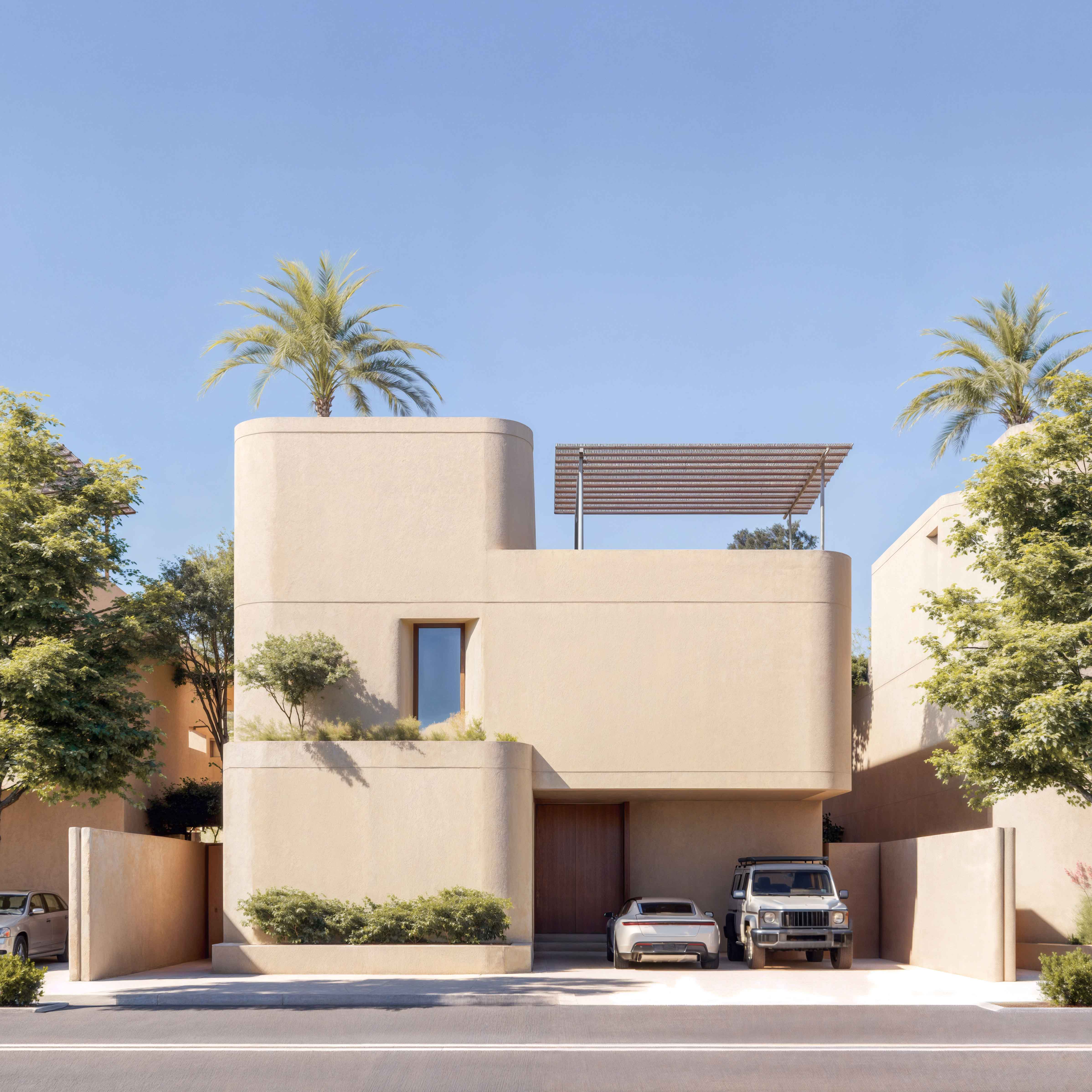
This residential villa reimagines traditional Emirati living through a contemporary lens, balancing cultural continuity with construction innovation and environmental responsibility. It is a house shaped by simplicity of form, material, and experience, while responding thoughtfully to the realities of its context: climate, culture, and community.
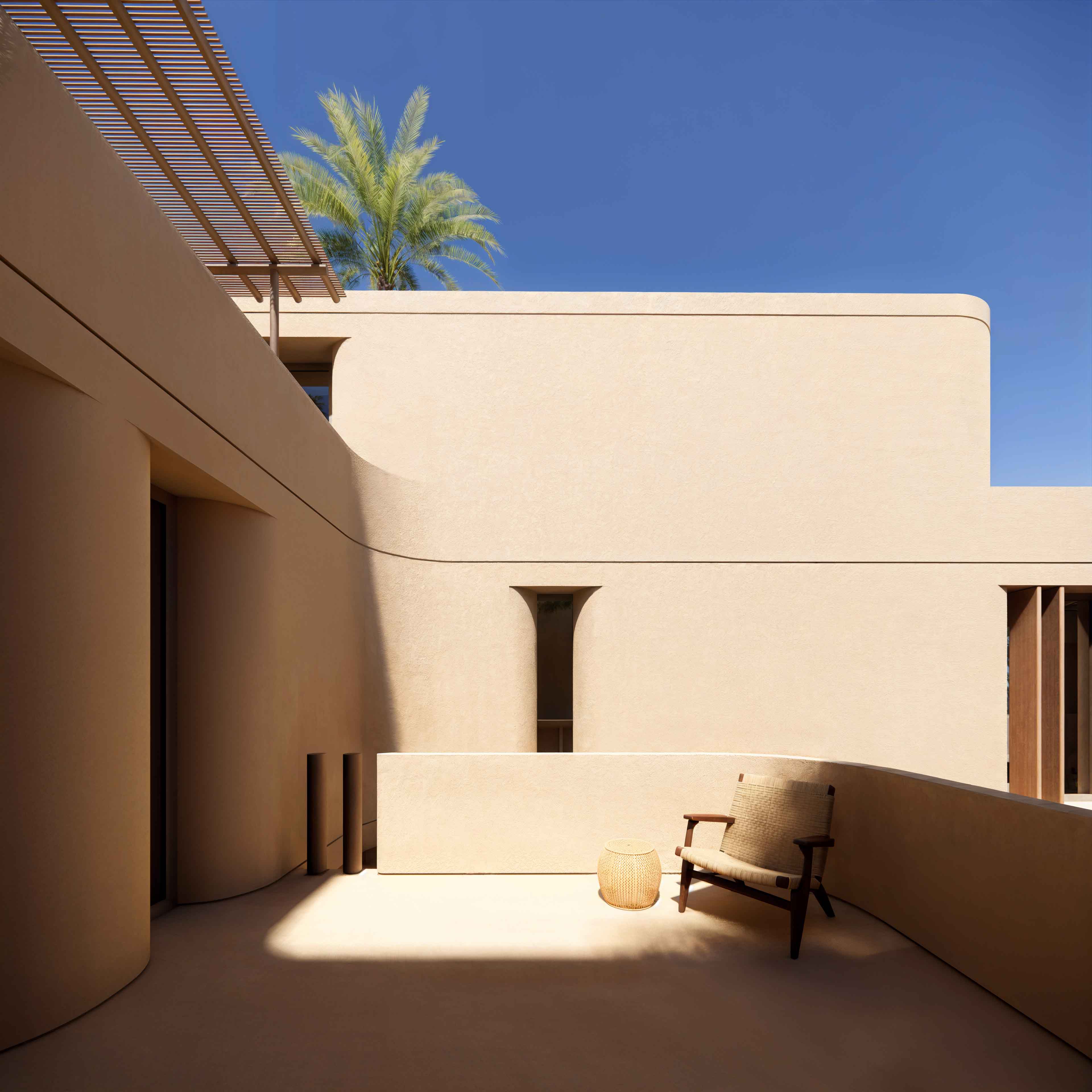
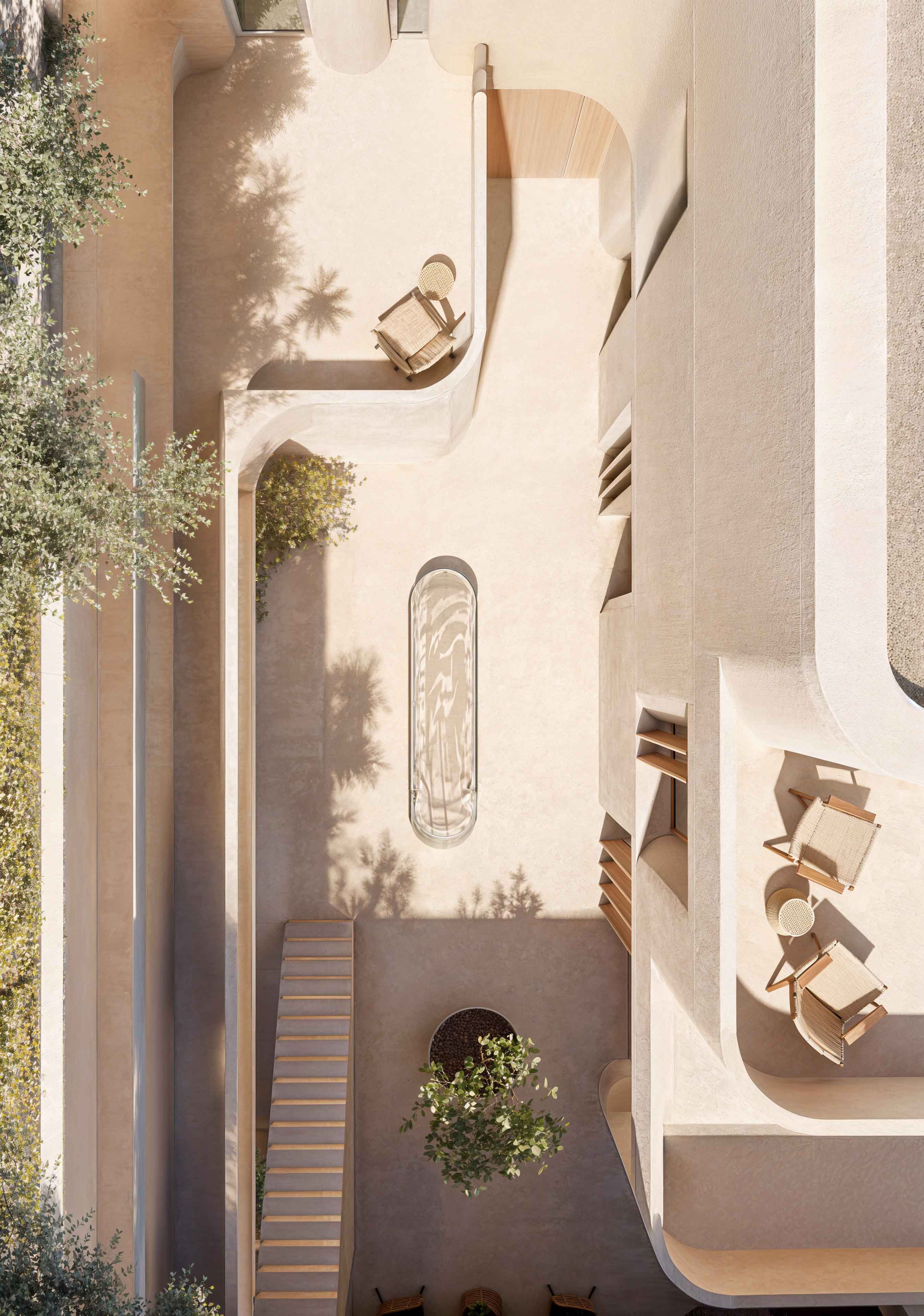
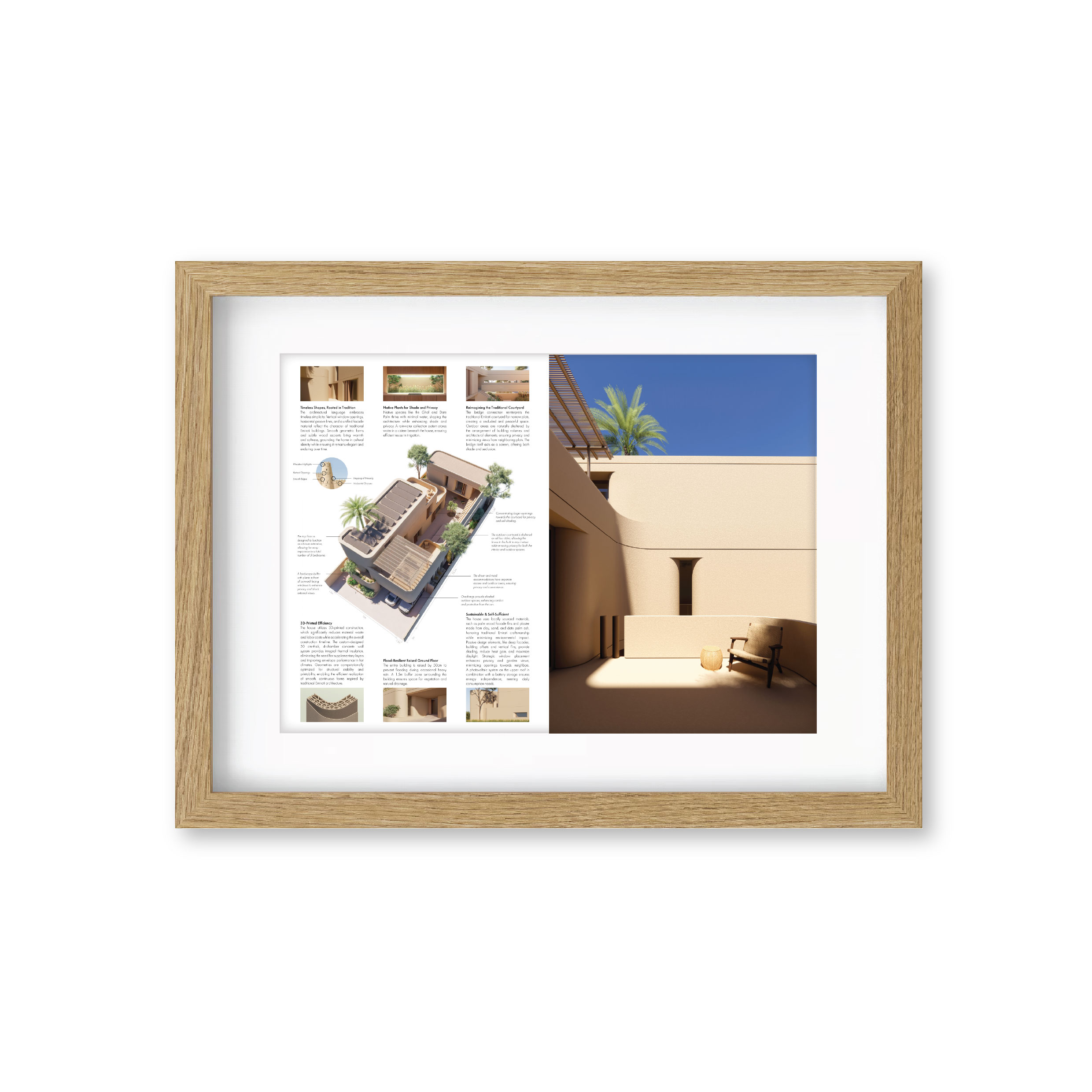
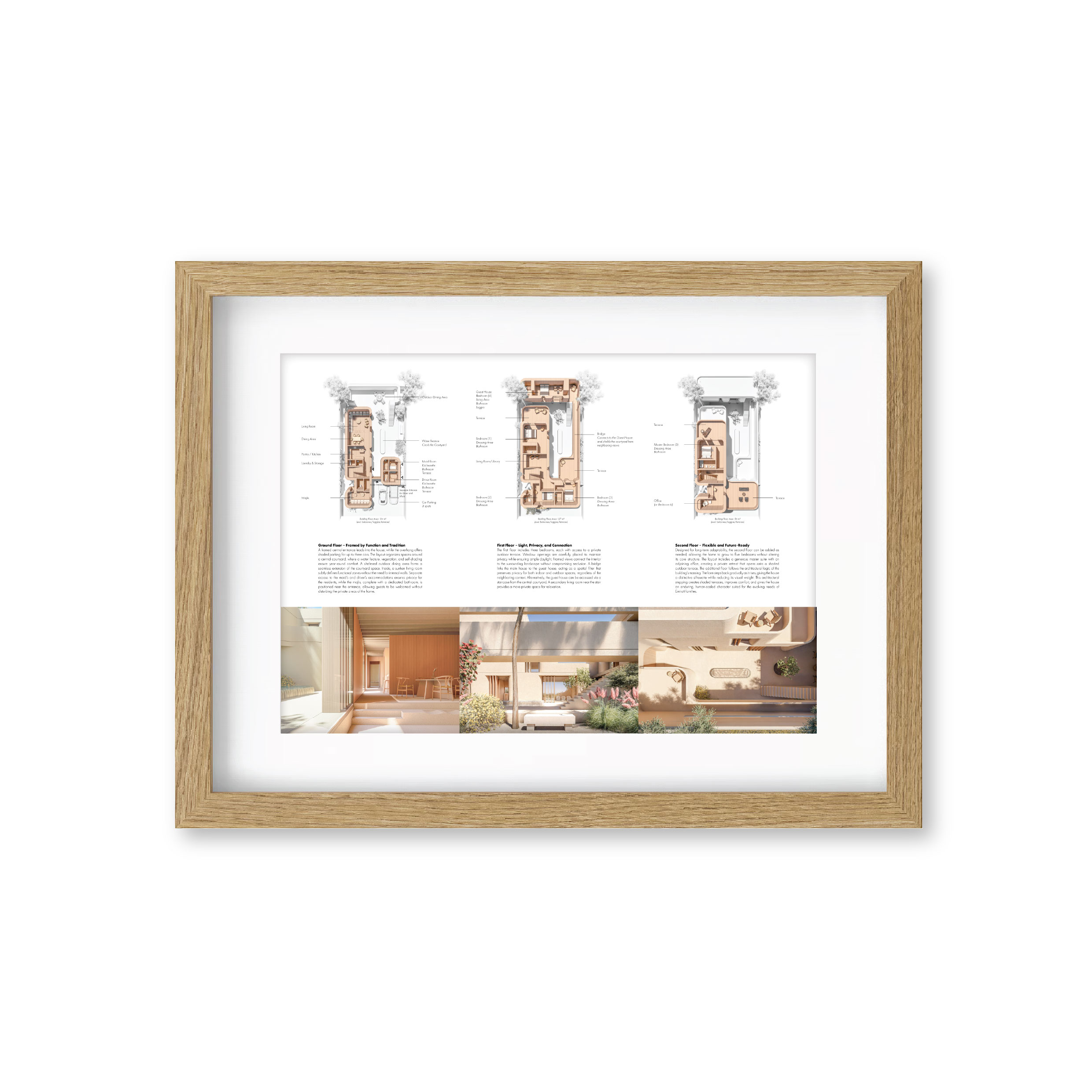
At the heart of the design is a central courtyard, a timeless typology that brings natural light, ventilation, and privacy into the home. Framed by curved, 3D-printed walls, the courtyard becomes a place of calm, softened by native vegetation and a water feature that together ensure comfortable use throughout the year. A sunken living room subtly defines zones without relying on solid partitions, creating openness and visual continuity across the ground floor. A majlis with a dedicated entrance and bathroom honors traditions of hospitality while maintaining the privacy of the rest of the house.
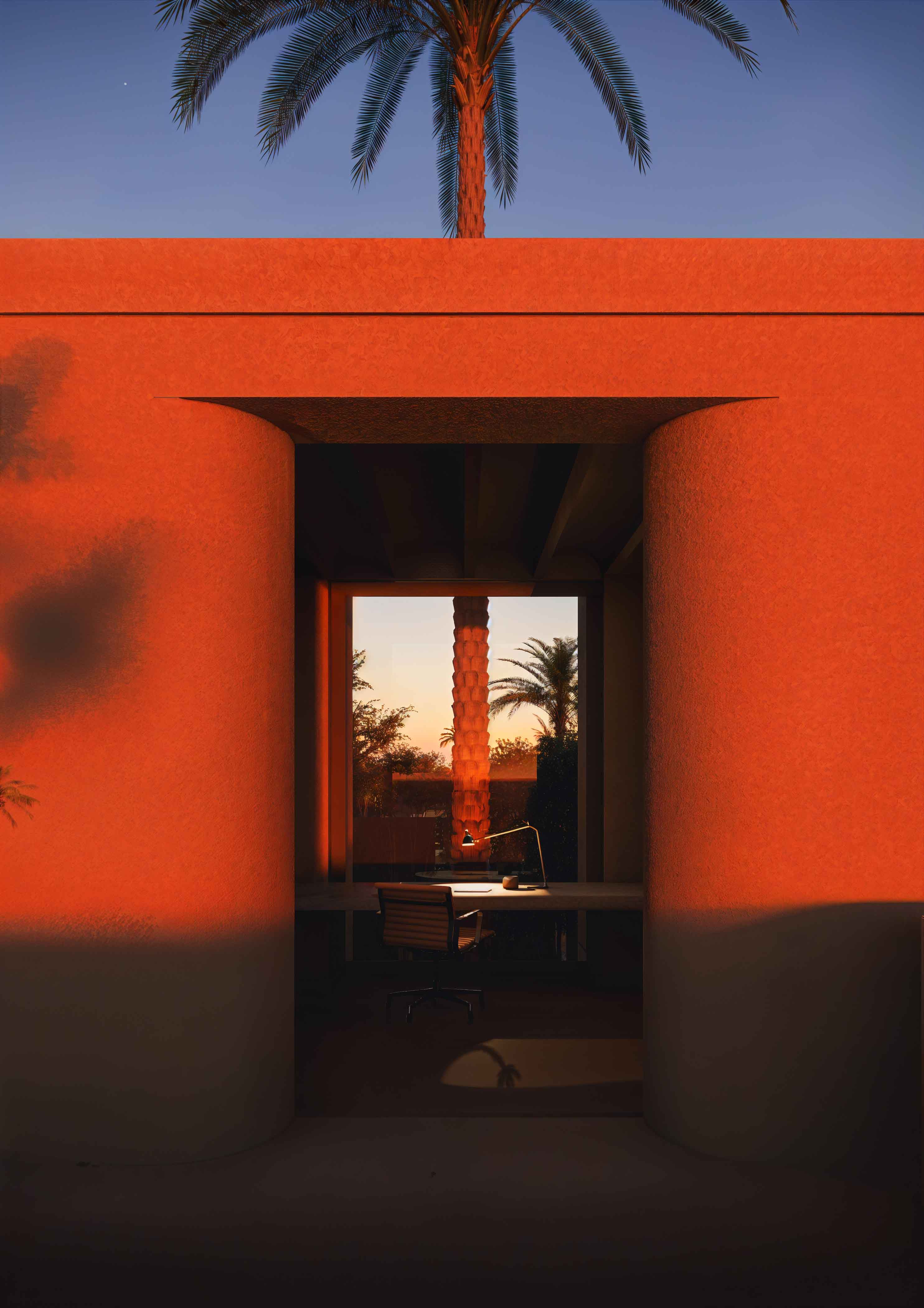
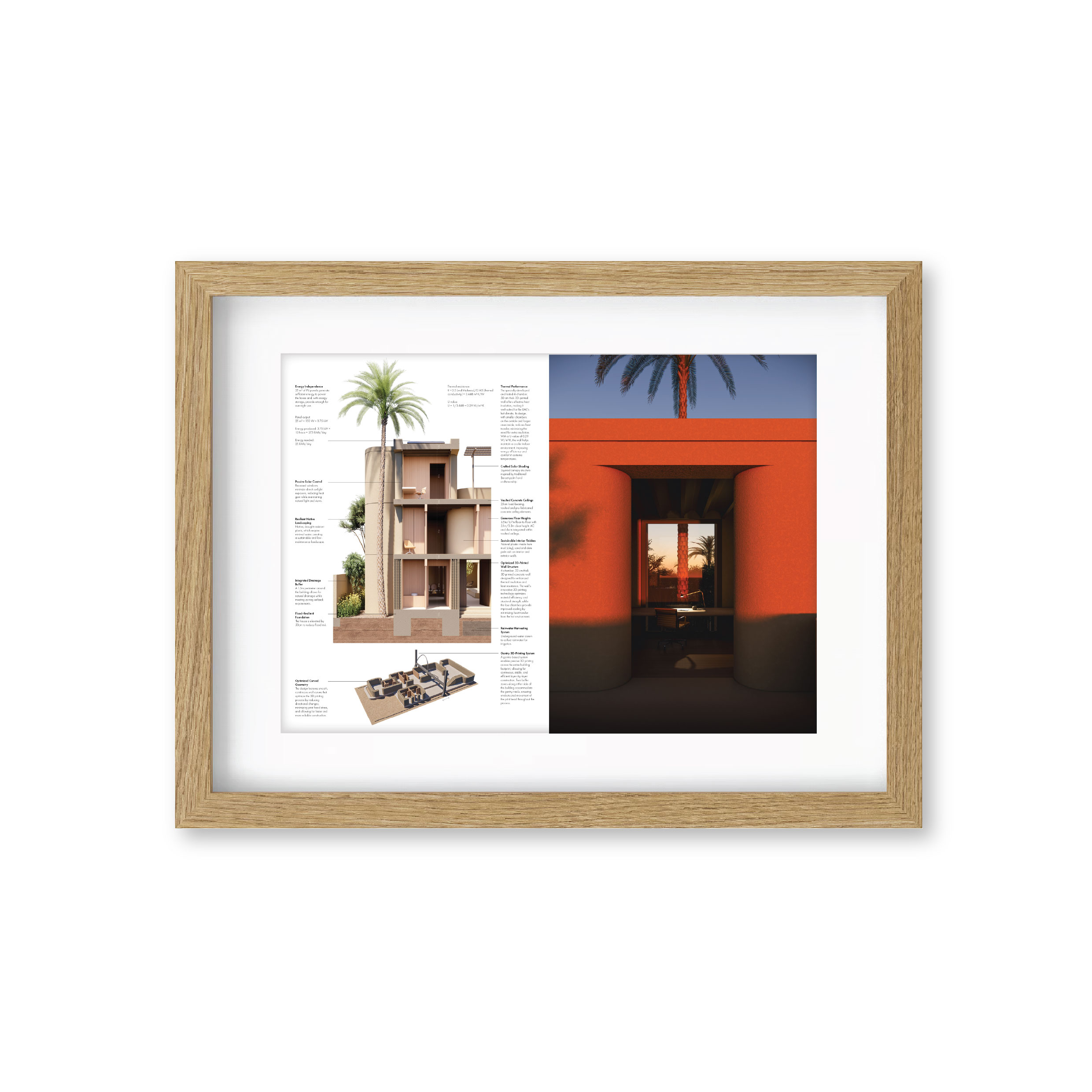
The structure is printed using a four-chamber wall system, developed to provide natural insulation and thermal mass. This reduces complexity and reliance on added materials or mechanical cooling systems. The geometry of the house has been carefully optimized for 3D printing, allowing for soft, expressive forms that recall the gentle curves of vernacular Emirati architecture. Window openings are recessed and complemented with vertical shading fins to reduce solar heat gain while ensuring daylight and privacy.
Landscaping plays a fundamental role in shaping the spatial experience. Native, drought-tolerant species such as the Ghaf and Date Palm have been selected for their ability to thrive in arid conditions with minimal water use. These plants are strategically positioned to provide shade, frame views, and enhance privacy. A planted 1.5-meter buffer zone surrounds the building, supporting natural drainage and complying with plot offset requirements. Stormwater is harvested and stored in a cistern beneath the house, supporting irrigation and cooling while promoting a sustainable water cycle.
Circulation is carefully orchestrated to balance connectivity and seclusion. A bridge links the main house to a separate guest house at the upper level, acting as both a spatial connector and a visual screen that shields the courtyard from neighboring plots. This elevated pathway allows the courtyard typology to function even on narrow sites. On the first floor, three bedrooms open onto shaded terraces, with curated openings that preserve views while avoiding unwanted sightlines. A secondary living space adjacent to the stair offers room for retreat and relaxation.
The home is designed with adaptability in mind. A second floor can be added at any point, expanding the residence to five bedrooms. This addition includes a spacious master suite with an office and private terrace, allowing the house to grow as family needs evolve.
This project reflects a clear and holistic approach: to create a home that honors the values of privacy, hospitality, and family, while embracing modern tools and environmental responsibility. Every element of the design, from construction technique to spatial layout, speaks to the integration of heritage and innovation.
This is not just a house. It is a living memory of place and tradition, reimagined through innovation. A home rooted in the past, shaped by the present, and ready for the future.
Latest Projects
All Projects


